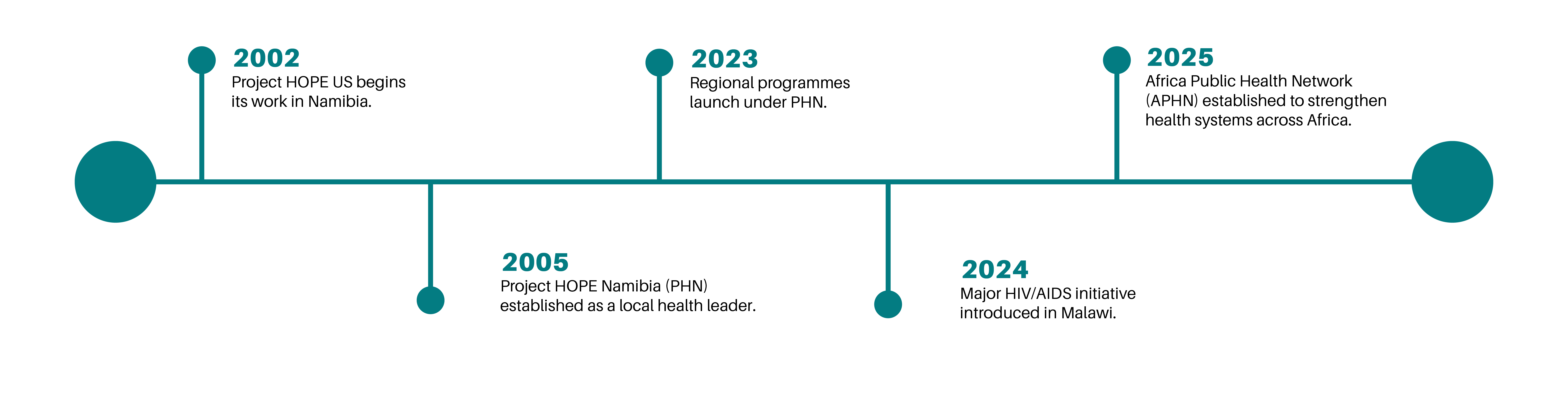
The Africa Public Health Network (APHN) emerged in 2024 out of a longstanding history that started with Project HOPE – a 65+ year old global health and humanitarian organization who began working in Namibia in 2002 to address some of the country’s most pressing health challenges. Over time, Project HOPE’s work expanded across Africa and has since been marked by transformation, collaboration, and growing impact, rooted in the organisation’s long-standing commitment to improving public health systems.
Where it all Began
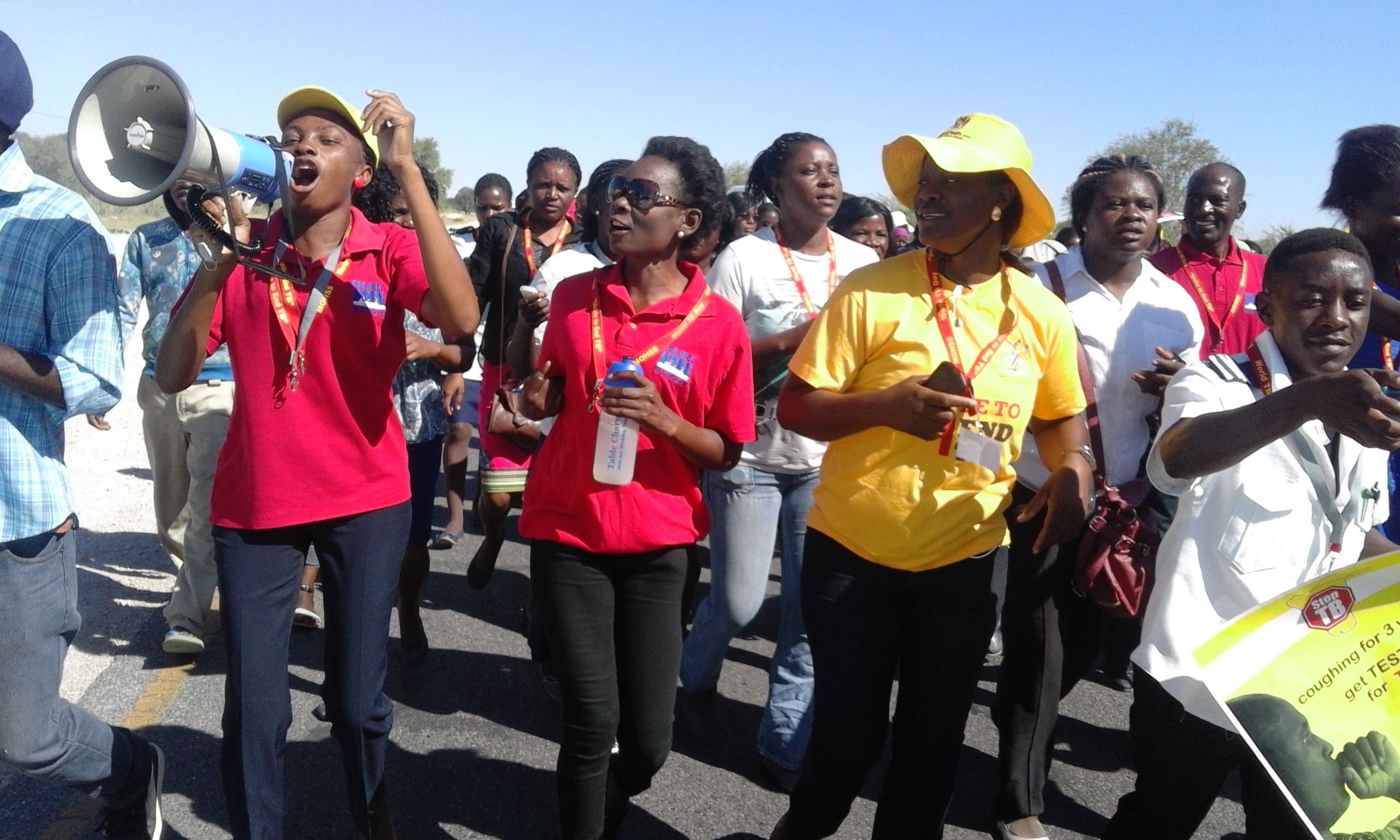
This initial intervention marked the beginning of a deeper and more sustained engagement with the country’s health challenges. Over the next few years, Project HOPE expanded its focus to include tuberculosis (TB) treatment and education. The organisation recognised that TB was a significant public health issue in Namibia, and worked to strengthen the capacity of local health systems to combat the disease. This work was crucial, particularly in the northern regions of the country where the TB burden was highest. Alongside its efforts in TB control, Project HOPE focused on building the coping capacity of households and communities caring for orphans and vulnerable children (OVC), who were disproportionately affected by the HIV/AIDS epidemic. By addressing both the health needs and the economic hardships of these families, Project HOPE began to make a tangible difference in the lives of many Namibians.
Bolstering Local Capacity: The Birth of PHN
As Project HOPE’s operations in Namibia continued to grow, it became increasingly clear that a more localised and indigenous approach to health interventions was essential for lasting change. This led to the establishment of Project HOPE Namibia (PHN) in 2005, a Namibian NGO that would serve as the focal point for the organisation’s work in the country. PHN quickly became a leader in public health in Namibia, offering technical expertise in infectious diseases, maternal and child health, and economic strengthening. It operated in close collaboration with government ministries and local partners, ensuring that its programmes were aligned with national health priorities and supported by the necessary technical and financial resources.
PHN further expanded its efforts even further, launching a programme that provided economic strengthening opportunities to OVC households. Through micro-credit loans, savings groups, and health education, this programme aimed to alleviate some of the financial burdens these households faced, while also equipping them with the tools needed to care for their children and ensure better health outcomes. As part of this initiative, PHN developed a curriculum specifically designed to support caregivers of OVCs, addressing essential topics related to caregiving, health management, and parenting. This holistic approach was instrumental in empowering communities to manage the complex challenges they faced, fostering long-term improvements in both health and economic stability.
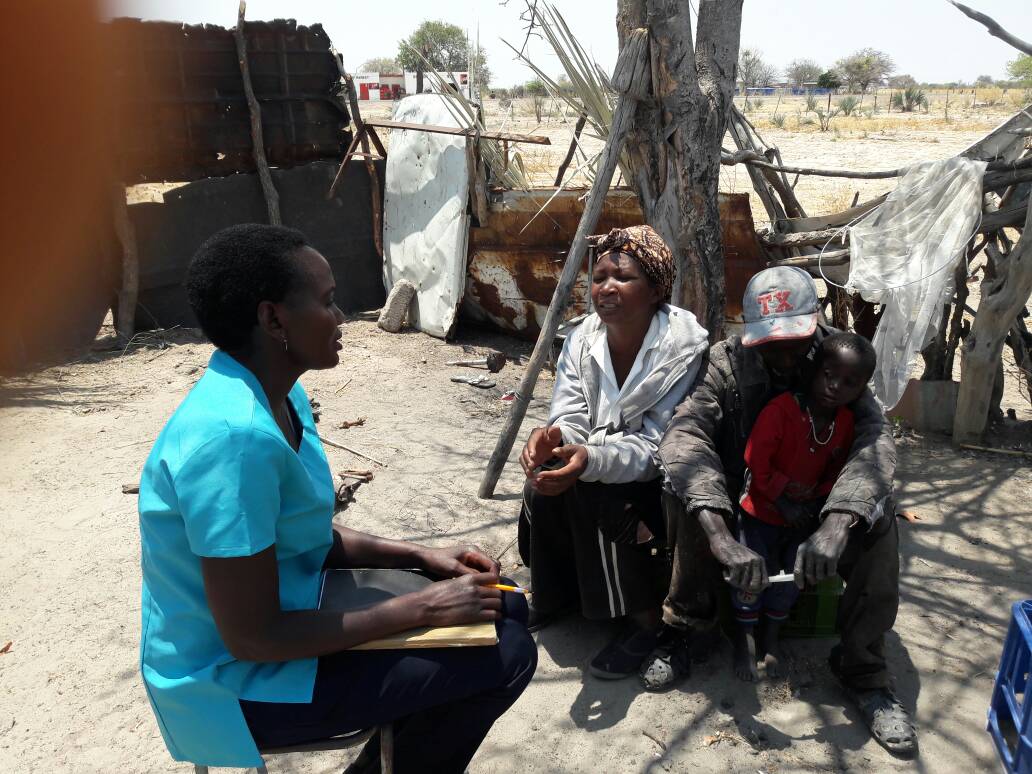
Recognising the importance of supporting young women in particular, PHN also initiated programmes aimed at preventing the spread of HIV among this vulnerable group. In 2008, the organisation introduced initiatives that targeted young women in selected regions of Namibia, providing them with economic opportunities and health education. Young women were given the means to escape the cycle of poverty and reduce their risk of engaging in transactional sex, a major factor in the spread of HIV.
By 2008, PHN had built a strong, community-driven approach to tackling some of Namibia’s most pressing health issues, particularly HIV/AIDS and TB. This approach was characterised by a focus on local ownership and community engagement, as well as a commitment to long-term sustainability. The organisation’s growing expertise in these areas laid the foundation for the next phase of its work in Namibia and across the African continent.
PHN’s work in Namibia quickly expanded, with the organisation implementing programmes in eight of the country’s fourteen regions. By working alongside local health systems, PHN was able to address the health needs of vulnerable populations, strengthen health workforce capacity, and improve access to critical health services. The organisation also provided vital technical support, grant management expertise, and health informatics solutions to ensure that its interventions were not only effective but also sustainable.
In 2023, Project HOPE Namibia (PHN) expanded its footprint further across the continent by launching a significant health intervention under the North Africa Saving Lives and Livelihoods programme. This initiative, aimed at strengthening health systems and addressing the ongoing impacts of COVID-19, was rolled out across seven North African countries, marking a key milestone in PHN’s regional expansion. Building on this momentum, just a year later, PHN launched a USD 60 million programme in Malawi focused on HIV/AIDS prevention, care, and treatment. This project represents a major investment in tackling the HIV epidemic in southern Africa, reinforcing PHN’s commitment to improving health outcomes and building resilient health systems across the continent.
Expanding our Footprint: The Evolution from PHN to APHN
Building on the success of PHN’s work in Namibia, the vision for a broader regional approach to public health began to take shape. The recognition of the health system gaps and challenges that persisted across Africa, particularly in the wake of the COVID-19 pandemic, spurred the creation of the Africa Public Health Network (APHN). Emerging from the rebranding of PHN, APHN was founded to address the persistent health system weaknesses across the continent, including limited access to healthcare, a shortage of health workers, and inadequate health infrastructure. APHN’s mission is to strengthen Africa’s public health systems by focusing on disease prevention, health equity, workforce development, and emergency preparedness, among other critical areas.
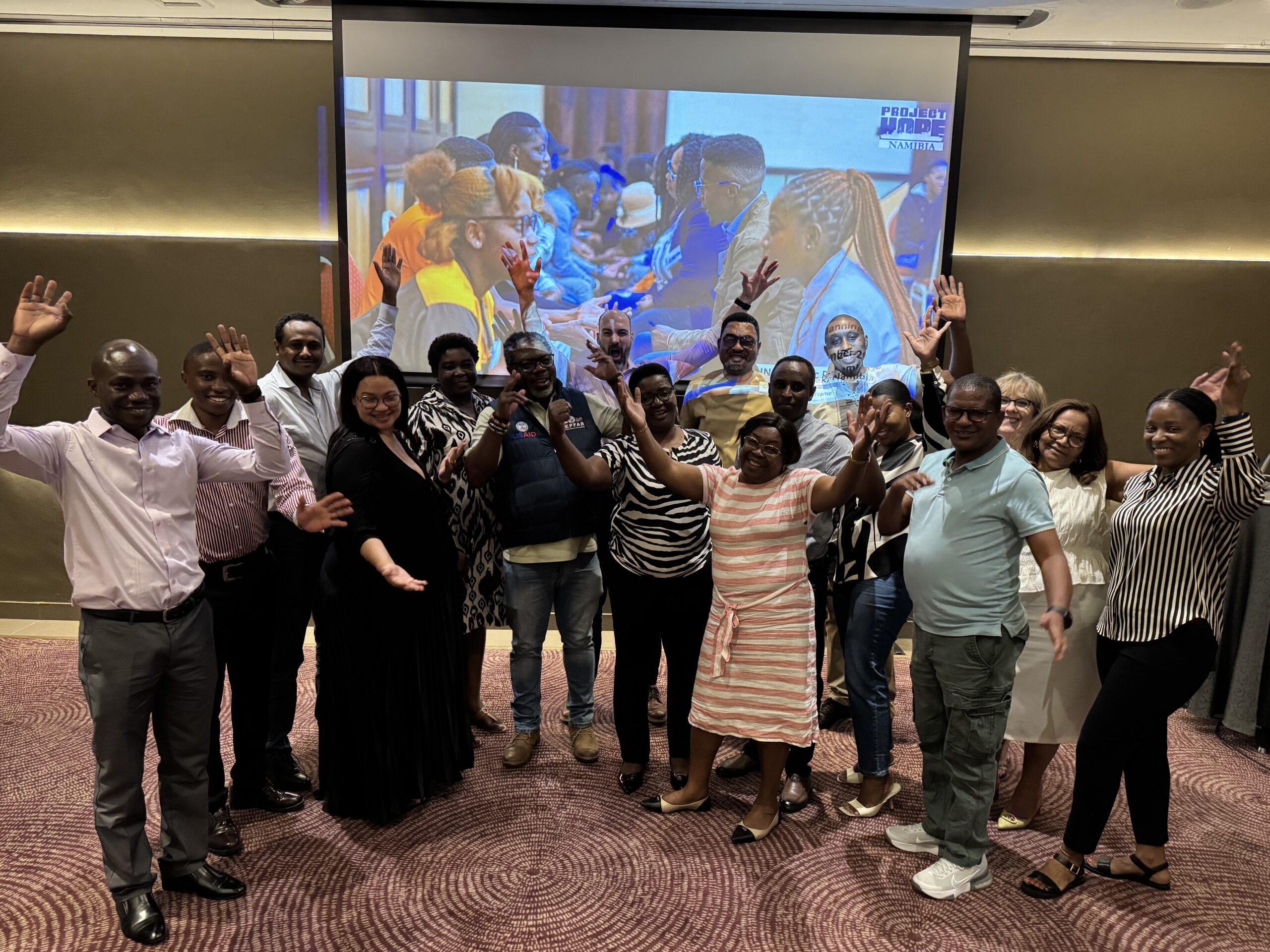
By bringing together a diverse range of entities, APHN plays a pivotal role in shaping the future of health systems across Africa. Through strategic partnerships with governments, local organisations, and international bodies, APHN is working to ensure that Africa’s health systems are more resilient, equitable, and responsive to the needs of its populations. The organisation’s comprehensive approach to public health continues to have a lasting impact, ensuring that communities across Africa can thrive in environments that promote health and well-being for all.
APHN brings demonstrated experience in strengthening health systems including diagnostic networks and introduction of innovative diagnostic tools. APHN’s institutional capacity is built on more than two decades of implementation experience through its predecessor organization, Project HOPE Namibia (PHN), established in 2005 as a locally registered Namibian NGO. Since 2005, PHN became a leader in public health in Namibia, offering technical expertise in infectious diseases operating in close collaboration with government ministries and local partners. PHN expanded its programmatic portfolio to exceed USD 90 million in funding, serving as prime recipient for large and complex grants.
PHN was prime recipient of the USD 31.9 million Namibia Adherence and Retention Project (NARP, 2013-2023) focused on HIV, TB and STI, and the USD 45 million DREAMS Twagamenwa project (2018-2023), averting new HIV infections among adolescent girls and young women. PHN currently implements the USD 33.7 million PEPFAR/USAID REACH Activity now transitioned to Department of State (DoS).
In Malawi, PHN implements the USD 60 million Ana ndi Achinyamata Patsogolo (ANAPA) project, a five-year PEPFAR-funded initiative prioritizing life-saving HIV care and treatment services for vulnerable population groups. APHN developed strong working relationships with key local partners and government actors in Malawi, coordinating closely to implement key health activities.
Through the USD 17.9 million Africa CDC and Mastercard Foundation partnership, PHN implemented a Health Security project focused on COVID-19 across six North African countries (Egypt, Algeria, Tunisia, Mauritania, Morocco, Libya), focusing on building robust community health worker capacity, and enhancing pandemic preparedness. This initiative laid groundwork for vaccine manufacturing in Africa by strengthening human capital and Africa CDC capacity.
APHN leverages strong relationships with ministries of health, national public health institutes, and regional stakeholders to support country-level adoption of improved diagnostic services, facilitating stakeholder coordination, policy alignment, knowledge exchange, capacity strengthening, and sustainability efforts ensuring diagnostic innovations integrate effectively into national health systems.
The Evolution to APHN
APHN as an Operating Model
APHN is NOT:
- A traditional NGO
- A full replacement of country offices
- Only a coordination mechanism
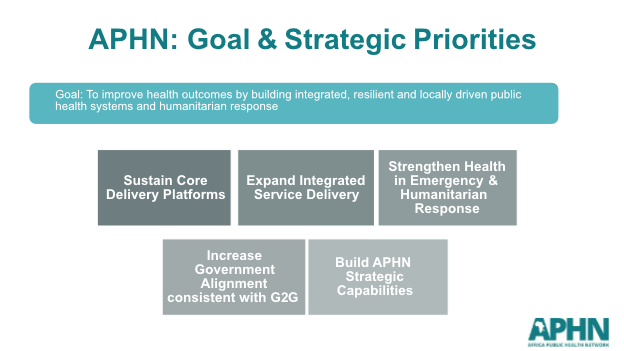
APHN is a network-led platform that:
- Aggregates public health and humanitarian capabilities across African partners and strategic institutions
- Selectively implements higher-value global health and humanitarian response activities
- Supports direct implementation and government-led execution models