Ana Ndi Achinyamata Patsogolo Activity (ANAPA)

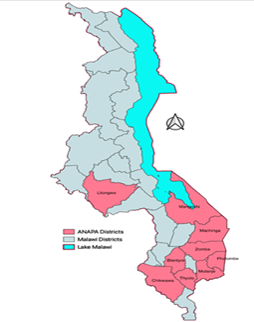
Project HOPE Namibia (PHN), a member of the Africa Public Health Network (APHN), implements a project called Ana ndi Achinyamata Patsogolo Activity (ANAPA) – Children and Youth First, funded by USG in Malawi. The project is implemented in 9 high HIV burden districts of Blantyre, Chikwawa, Lilongwe, Machinga, Mangochi, Mulanje, Phalombe, Thyolo, and Zomba.

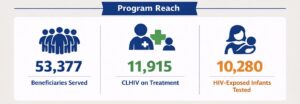
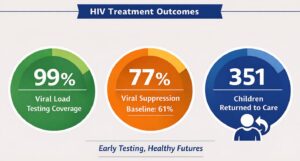
By the end of FY25, APHN supported communities within the catchment areas of 142 health facilities, including five Centers of Excellence and multiple government-led sites, reaching 55,862 program participants (children living with HIV (CLHIV), HIV-exposed infants (HEI), and caregivers) with lifesaving facility and community HIV care and treatment services. Among the 10,420 CLHIV enrolled in ANAPA, 99% were eligible and received a viral load (VL) test, and 77% achieved viral suppression by the end of FY25 (compared to 61% at the end of FY24), despite the intentional enrolment of CALHIV with high baseline VL.
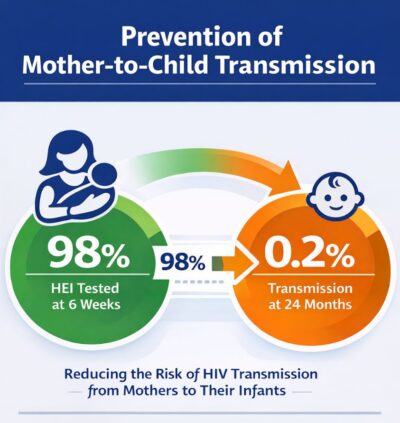
A total of 7,254 HEIs were enrolled and due for HIV testing across the three Early Infant Diagnosis (EID) milestones. At 6 weeks, 1,610 infants were due for testing, and 1,608 (99%) were tested, with 1,607 (99.9%) testing HIV-negative and 1 (0.1%) positive. At 12 months, 4,409 were due and 4,280 (97%) were tested, yielding 4,272 (99.8%) negative and 8 (0.2%) positive results. By the 24-month milestone, 1,207 infants were due and 1,045 (87%) were tested; 1,042 (99.7%) were negative and 3 (0.3%) tested positive. Cumulatively, 6,933 HEI were tested and 12 were HIV-positive, corresponding to an overall positivity rate of 0.17%.

Despite the implementation of lifelong ART (Option B+), Malawi’s national MTCT rate at 24 months remains high at 6.7%, exceeding the EMTCT national target of <5%; the national positivity rate for HEIs at 24 months is 2%. In contrast, the ANAPA program’s 24-month positivity rate of 0.29%, highlighting the added value of intensive community-based follow-up and HIV-sensitive case management.

Emergency Food Support

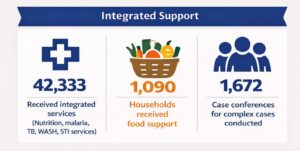
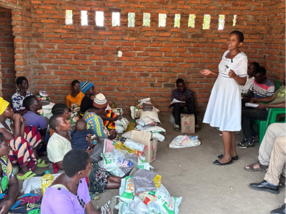
As part of lifesaving interventions, ANAPA provides emergency food support to households of CLHIV and HEI with clinical malnutrition. The children are identified through a comprehensive nutrition assessment conducted jointly with clinical partners and Ministry of Health (MoH). The nutrition support aims at facilitating recovery from malnutrition and improves the nutritional status of children, enhance treatment adherence among CLHIV, improve health outcomes and promote overall well-being within the affected households. In FY26 Q1, a total of 1,090 households benefited from the nutrition support, reaching 3,325 beneficiaries across 125 ANAPA supported health facilities. The nutrition package provided per household included maize flour, sugar, salt, beans, cooking oil and blended soy porridge flour.

A nurse speaking to caregivers during food distribution exercise at Likangala health facility in Zomba. Photo credit: ANAPA

Emergency Response Support (Cholera Outbreak Response Support)

Malawi has been experiencing a cholera outbreak since 11 December 2025, with sustained transmission reported across multiple districts. By end of April 2026, the country had recorded over 135 confirmed cholera cases, affecting districts including Blantyre, Lilongwe, Mulanje, Chikwawa, Zomba, among others.

In response, APHN with support from Project HOPE supported response efforts in Blantyre – with the highest burden, registering 106 confirmed cases by end of April 2026; and Lilongwe, which recorded 5 confirmed cholera cases and 159 suspected cases, indicating ongoing transmission and vulnerability, particularly in densely populated and underserved areas.

The support included intensified community outreach activities where integrated district response teams conducted health education, water testing and treatment through pot-to-pot chlorination, as well as disinfection of households following confirmed cholera cases in the cholera hotspots.  Additionally, the initiative also included procurement and distribution of WASH commodities such as Chlorine, tapped water buckets as well as information, education, and communication (IEC) materials.

The outbreak was largely driven by a combination of environmental and behavioral factors. Flooding and heavy rains led to contamination of water sources and damage to sanitation infrastructure. Many communities relied on unsafe or unprotected water sources, while intermittent access to safe water further increased vulnerability.  Poor sanitation and hygiene practices at the household level, coupled with high population density in urban and peri-urban areas, contributed to the rapid spread of the disease.  Conducted for two months (March-April 2026), the initiative reached a total of 1,422 people with Case Area Targeted Interventions (CATI) sessions following confirmed cholera cases; and 1,039 people with general cholera awareness.

Best Practices

Frequent visits to households of CLHIV with high viral load

Visited twice a month to understand better the underlying issues for the high viral cause. This ensures targeted interventions to deal with the issues rather than a generalised approach

Multi-disciplinary Case Conference

Conducted for complex non-suppressing cases. Various stakeholders engage with caregivers and where possible CLHIV to dig deeper into issues causing the child’s persistent high viral load.